
Shaping London's clean air policies
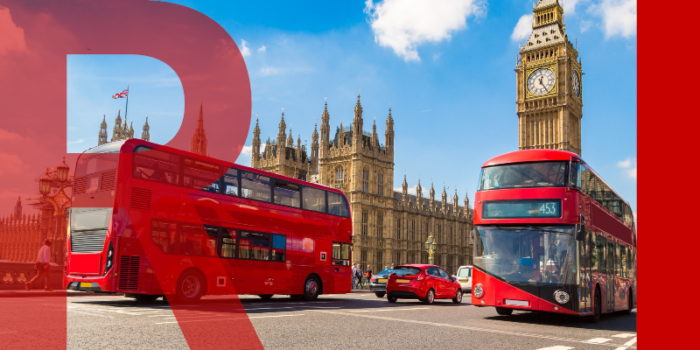
As one of Europe’s leading authorities on vehicle emissions and air pollution, it was perhaps inevitable that James Tate should find himself invited to play a role in shaping Transport for London’s (TfL) ultra-low emissions zone strategy.
“TfL had a skills gap that they needed to close quickly,” says Dr Tate, whose research at the Institute for Transport Studies (ITS) has been instrumental in exposing the hazards that modern diesel vehicles pose to people and the environment.
In looking to bridge that gap, TfL got in touch with senior figures on the ITS industrial advisory board who understood both the needs of policymakers and the capabilities of the Institute’s cutting-edge research. Dr Tate was identified as the right candidate to give TfL access to air quality and vehicle emissions expertise, including access to state-of-the-art mathematical models of real driving emissions.
Dr Tate was awarded £8,000 from the EPSRC Impact Acceleration Account (IAA) to support his secondment. “Normally such a project would have taken months and months to secure funding, by which time the opportunity would have passed,” said Dr Tate. “That’s why access to the IAA was crucial to making this happen.”
Impact
- Policy impact: improved the quality of data used by Transport for London, leading to evidence-based policy change.
Key information
- Major funders: UK Research and Innovation, Engineering and Physical Sciences Research Council (EPSRC) Impact Acceleration Account
- Partners and collaborators: Transport for London (TfL), London Wide Policy and Strategy
- Disciplines: transport, data, environment
- Investigators: Dr James Tate.
Forecasting vehicle emissions
No sooner had the EPSRC funding been agreed than Dr Tate was on a train to London. Hot-desking with colleagues across disciplines, he soon became a trusted and highly valued member of the team working to shape the capital city’s clean air policies.
“TfL had a long wish list of things they wanted me to look at,” he said. But the immediate focus was on providing reliable evidence on the real emissions performance of cars, taxis, vans, trucks and buses in London driving conditions.
“We combined TfL’s measurements with my own and adjusted my research models to reflect the London fleet and driving conditions. This evidence now underpins the design of air pollution policies including efforts to develop a new, clean London taxi and the Ultra-Low Emission Zone plans.”
“I had been collecting my own evidence on the real emission performance of vehicles long before the VW scandal broke. It was clear to me that the figures being cited by the manufacturers and often echoed by policy makers were overly optimistic about how clean modern diesel engines really were,” said Dr Tate.
He has since appeared before the House of Commons Transport Select Committee to give evidence on the startling discrepancies between vehicle emissions recorded in the lab and those in the real world.
The forecasting models that he and his colleague at ITS have developed, by contrast, are much more accurate and realistic than those available to policymakers; it was these insights that the strategists at Transport for London were keen to explore.
“They knew their forecasting wasn’t as good as it could be, and they wanted to make a step-change in how they did their modelling,” he added. TfL were impressed with the advanced, dynamic modelling that ITS had developed and that set the benchmark standard.
What they were able to show Dr Tate was equally impressive. “TfL has more data on the latest Euro 6 / VI vehicles than perhaps the rest of Europe put together: huge data streams that they hadn’t really tapped into or exploited to the full; for a researcher, this was a gold mine. They also have high-resolution data on bus movements and emissions that allowed me to show the clean air benefits that would come through investing in renewing the bus fleet,” he said.
In addition to clean air – it is estimated that as many as 9,500 people die each year in London because of air pollution – TfL were also keen to limit their impact on climate change.
“There is a widespread feeling within TfL that they are under predicting C02 emissions from road transport. So we started talking about how we could do this better,” Dr Tate said. By combining his knowledge and models with the vehicle data that TfL was able to provide, Dr Tate developed a forecasting toolkit that much more accurately predicts the levels of carbon dioxide emissions from traffic in London.
“Having James as a member of our strategy team has given us fresh insights into how we can exploit the rich data streams that we have within our organisation,” said Elaine Seagriff, Head of London Wide Policy and Strategy.
Elaine is a key player in the development and execution of the Mayor’s Transport Strategy and the transport elements of the Mayor’s spatial development strategy. “James has challenged us in a very positive way, making a significant contribution to both the clean air and the climate change dimensions of London’s Transport Strategy.”
Continuing support
Indeed, TfL are now using the toolkit – designed and developed using the knowledge and expertise at the ITS in Leeds – to help them model not just carbon emissions but also the wider air quality impact that traffic has on the city and its people.
“Our models are much better at reflecting real-world conditions, and especially those in London where there is a lot of slower, stop-and-start driving,” Dr Tate said.
His work has since been factored into London’s wider pollution model to look at how emissions disperse across the city.
“It’s a very exciting development and one the TfL team and I are working on together. We are publishing papers together and leading conferences to discuss and disseminate what we are doing. This is great for the staff at TfL because it raises their profile and shows the contribution they are making to improve the health and wellbeing of the people living and working in London.”
A measure of the success of the initial IAA funding is that TfL has not only funded two extensions to his original secondment, but has also developed a much closer relationship with ITS. This has been reflected in a partnership agreement and an application to join a Framework Agreement to become a supplier to TfL.
“Our goal is to develop the tools that will enable London’s policymakers to base their decisions on the best evidence. The access we now have to their data shows the trust and respect that TfL has for what we do. We have shown them just how valuable this information is, and how they can use it for the benefit of London. But TfL also wants to share this information and best practice. We have presented jointly at conferences, and I have been promoting it within the research community.”
Dr Tate says there is lasting legacy to come out of that initial funding. “TfL now have a number of toolkits that were made and developed with significant input from ITS researchers at the University of Leeds. This resource is enabling them to blaze the trail in terms of policy advances for improved air quality in our cities,” he said.
Perhaps most controversially, TfL look set to act on his advice to allow older petrol cars to be able to drive freely in the ultra-low emission zone “to make a powerful differentiation between petrol and diesel.” That will not be an easy decision to take, but the evidence is there, and TfL have listened and understood the evidence.
Dr Tate continued to support TfL with its carbon reduction strategy, but he has also been asked to work with the organisation’s Surface Transport (Operations) team, sub-contracted through the internationally recognised traffic microsimulation company TSS (Aimsun). His vehicle emissions models at different levels of detail will be integrated with the Aimsun software, which is very widely used across the transport industry.
“I have been at the very heart of policy-making and now developing tools that will be used widely across Europe. This is also great for my students,” says Dr Tate.
“They come to the ITS because they know they will be taught by people who are not only at the cutting edge of theory, but who are also deeply engaged with putting those theories into practice. TfL are regarded around the world as a beacon of transport planning for what they are doing, from cycling and health to the environment and clean air. Our partnership with them will only make ITS and the University of Leeds all the more attractive to the best students from around the world.”
This project was sponsored by the UKRI Impact Acceleration Account.