
Retrofitting an accessible highway
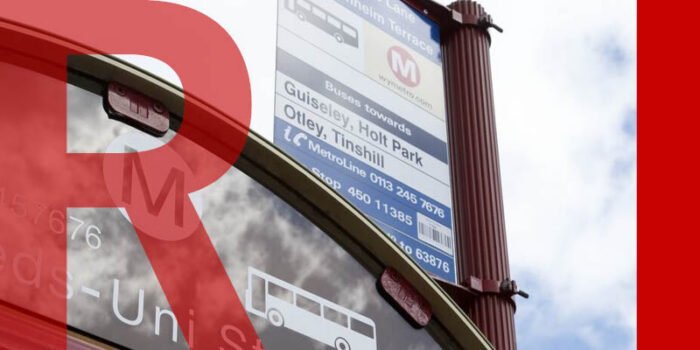
In a country with an ageing population, designing optimal services for older people and those with disabilities to maximise accessibility and mobility is essential. Mobility affects individuals’ financial, social, physical and emotional health and wellbeing, which in turn supports a healthier society with a boosted economy and reduced pressure on health and social care.
Kasia Speakman, a sustainable transport planning expert from Leeds City Council, went on a Knowledge Transfer Secondment with Dr Bryan Matthews at the Institute for Transport Studies at the University of Leeds. They investigated the impacts and effectiveness of a user-led approach to retrofitting highways in and around Leeds with disability adaptations.
Impact
- Access and inclusion: worked with disabled people to retrofit highways and make them more accessible
- Health and economic impact: reducing pressure on health and social care systems by supporting older people and those with disabilities to be mobile and independent.
Key information
- Major funders: Engineering and Physical Sciences Research Council (EPSRC) Impact Acceleration Account (IAA)
- Partners and collaborators: Leeds City Council
- Disciplines: sustainable transport
- Investigators: Kasia Speakman, Dr Bryan Matthews.
Transformational impact
The secondment aimed to increase understanding of the importance of accessible street environments for people with mobility impairment, to support their independent mobility, their autonomy and their social and economic engagement with their local community while reducing reliance on care interventions.
As part of this, the researchers explored benefits to district centres from local spend by older and disabled people as well as their sense of choice, control and wellbeing.
User-led requests included, for example, ramps and dropped kerbs to provide accessible routes that linked disabled people to the local facilities in their neighbourhoods, enabling everyday journeys for retail, leisure and social interaction. This was a demand-led process where the most acute needs were identified by stakeholders – that is, disabled people, their carers, service providers and community groups.
The research into the nature of the retrofitting revealed that the changes had transformed the lives of those who had requested them financially, socially, physically and emotionally. By improving accessibility, local services benefited.
Research participants said:
Having dropped kerbs has changed how much I can get around my local area, and bus stops. Because you see that’s the other thing – the bus stop is all accessible, but if you actually cannot get on to that bit of path you can’t get to the bus stop.
They have made a real difference to whether I go independently or not, to whether I can go out or not, whether it is safe to go anywhere or not.
It has helped me to feel more included – it opens up more avenues that I can access. I think it probably gives me a sense of wellbeing.
The transformational impact on older and disabled people's lives following Leeds City Council’s implementation of user-led requests has meant that they:
- Could go out more often, independently, and to more places
- Didn’t always have to rely on a car
- Could reliably get to where they wanted to go
- Could get on the bus (where before they couldn't get to the bus stop)
- Didn't have to spend as much time pre-planning journeys and potential obstructions (e.g. kerbs, school pick ups, bins)
- Experienced reduced travel costs because there was less reliance on taxis
- Could stay out longer as the journey was more comfortable, less painful and less stressful
- Had leisure journeys, which are crucial to wellbeing
- Could socialise more – from meeting strangers and friends to going out with grandchildren.
Improved strategy in Leeds and beyond
Leeds' new strategy to incorporate accessible design into street refurbishment and to respond to disabled people’s requests was effective. It was a collaborative and inclusive approach, as the investigators worked with users to create solutions. This means the transformational impact of seemingly minor street modifications was remarkable.
Kasia Speakman said: "We wanted to marry research and real life. “You asked for X. We delivered X. What happened next? You got exactly what you asked for where you wanted it.” We were interested to discover what happened after the change took place. Did it make any difference, and what’s the scale and scope of those changes? Once there has been a proliferation of requested changes, is there a bigger effect beyond that on an individual level?
"It transpired that the changes were transformational for people and their carers. They were transformational in what they could do and the ease with which they could do them. Even if it was going to the shop for nothing much in particular. It was the difference between getting out of the house that week or not. Why should they have to do everything in isolation and online?"
Dr Bryan Matthews said: "Technological innovation in transport often means that pedestrians get overlooked. Pedestrians are everyone’s and no one’s responsibility. The industry has become fixated on public transport and ensuring that everyone can board buses and trains, and buy tickets. These are all important, but unless you can get out of your house and cross the street in front of your house, some of those other things become irrelevant.
"We need to focus on the mundane yet really important aspects of transport planning: the first and final 50 metres on a journey. This is the last piece of the puzzle to be put in place. Saying that, getting the mundane things right isn’t a reason to put the technology to one side."
The Government is investing £173 million into public transport improvement in Leeds and the findings from this research secondment have been fed into stakeholder events as part of the Leeds Transport conversation. Furthermore, the research findings were fed back to bus operators, resulting in improvements in West Yorkshire Combined Authority’s new fleet.
The Knowledge Transfer Secondment enabled a two-way transfer of knowledge between Leeds City Council and the University of Leeds. The secondment explored the boundaries between theory and practice to the mutual benefit of disabled travellers in Leeds and much further afield through the dissemination of shared research findings at national and international conferences and in journal publications. The University benefited from access to real-world traveller data.
The secondment has improved links between the University and Leeds City Council and has been a catalyst for expanded collaborative working between the two organisations.
This project was sponsored by the UKRI Impact Acceleration Account.