
National Robotics Facility
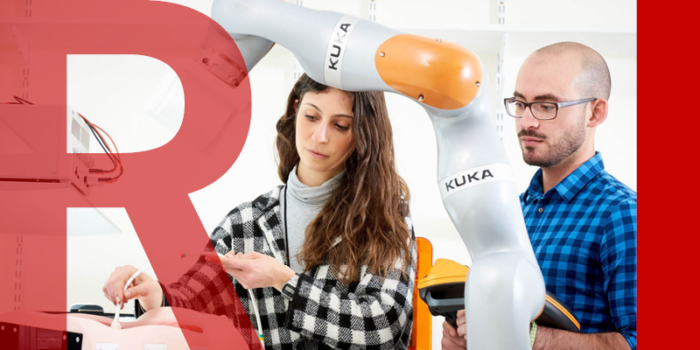
Professor Robert Richardson is the Director of the Leeds EPSRC National Facility for Innovative Robotic Systems, a world-class facility for designing robotic systems, initiated in August 2013.
The Government has identified Robotics and Autonomous Systems as one of the ‘Great Eight Technologies’. A multidisciplinary team of engineers, scientists and clinicians at the University of Leeds are recognised as being at the forefront of robot design and construction, as they are developing novel robotics systems and technologies that revolutionise lives, economies and human societies.
Impact
- Economic impact: growing the robotics industry through partnerships, collaboration, and strategic relationship-building.
Key information
- Major funders: Engineering and Physical Sciences Research Council (EPSRC), UK Research and Innovation (UKRI) Impact Acceleration Account
- Disciplines: robotics, engineering
- Investigators: Professor Robert Richardson.
Developing new partnerships
Following the creation of this world-leading EPSRC-funded robotics facility at the University of Leeds, Professor Richardson received an award from the Impact Acceleration Account to assist with the facility’s strategic development.
The purpose of the award was to initiate and develop new key relationships with industrial and academic partners in the fields of robotics and mechatronics regionally, nationally and internationally within the key themes of:
- Exploration
- Assistive / enhancive
- Rehabilitation
- Surgical technologies
- Exploring new opportunities in space robotics, civil robotics and agricultural robotics.
As Professor Richardson explains: "The funding enabled us to expand our academic and industrial interface in size and scope. It has led to long-lasting strategic collaborations that are mutually beneficial, and well on the way towards generating long-lasting impact."
Its impact included:
- A review of the industry’s needs and how the facility could contribute
- A review of academics’ needs within industrial collaborations
- Contact with 42 new potential industrial collaborators
- New relationships with 14 robotics-related companies explored through collaboration events
- Established relationships with solar transport systems to develop solar-powered autonomous cars
- Closer relationships with over 10 industrial partners that have supported research grant applications
- Collaboration on research projects through the robotics facility
- Facilitated effective interactions with industry to build on the industrial engagement strategy
- Industrial partners growing as a result of direct access to the facility and academic expertise.
The development of long-term strategic relationships is the key to the success of the facility plus growth and focus within industry. Industrial partners benefit from academic expertise; rather than manufacturing robotic components at huge expense, academics can advise whether those components would actually work in real life.
This project was sponsored by the UKRI Impact Acceleration Account.