
Making suffering visible: a digital lifeline for palliative care in Uganda

Millions of people live and die with serious illness – advanced cancer, organ failure, HIV – without access to pain relief or palliative care, and the gap is starkest in low-resource and humanitarian settings. Uganda hosts one of the world’s largest refugee populations, yet fewer than one in ten Ugandans who need palliative care receive it.
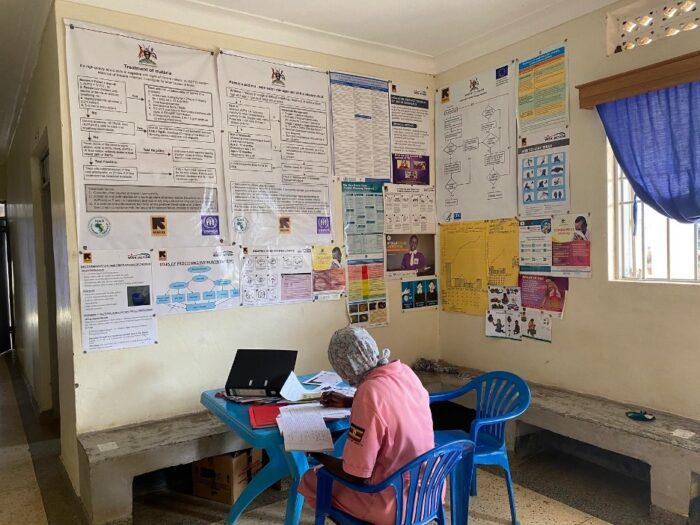
For people with advanced illness in refugee settlements, that often means interrupted treatment, fragmented services, and long journeys to the nearest hospital – with no reliable way for health workers to record what patients are actually experiencing, or make those needs visible to the people who plan and fund services.
Professor Matthew Allsop and colleagues at the Leeds Institute of Health Sciences, working with the African Palliative Care Association (APCA) and Ugandan technology company MRT IT Peaks, developed mPallCare – a mobile health platform now moving, with University of Leeds Impact Acceleration Account (IAA) funding, from a proven pilot towards a Ministry of Health-backed national rollout.
Impact
- Knowledge discovery: demonstrated that a digital symptom-reporting tool can work in one of the most challenging care settings there is, while identifying exactly what needs fixing – connectivity, translation, usability – before it can scale.
- Policy and societal impact: established a direct partnership with Uganda’s Ministry of Health to build a national implementation roadmap, alongside published evidence now shaping international advocacy for palliative care in humanitarian responses.
Key information
- Major funders: EPSRC/MRC Impact Acceleration Account (IAA); MRC Global Challenges Research Fund (MR/S014535/1); Yorkshire Cancer Research University Academic Fellowship
- Partners and collaborators: African Palliative Care Association (APCA); MRT IT Peaks Ltd; Uganda Ministry of Health; International Rescue Committee; Hospice Africa Uganda; Mulago Palliative Care Unit; Uganda Cancer Society; and village health teams across the Bidi Bidi, Nyumanzi and Kyaka refugee settlements
- Disciplines: palliative care, global health, digital health
- Investigators: Professor Matthew Allsop; Associate Professor Bassey Ebenso, Dr William Goodman, Associate Professor Shaunna Burke, Associate Professor Sahla Aroussi, Dr Ning Song, Eme Asuquo, Agatha Aduro-Agema, and a wider international research collaboration.
A tool built with the people who use it
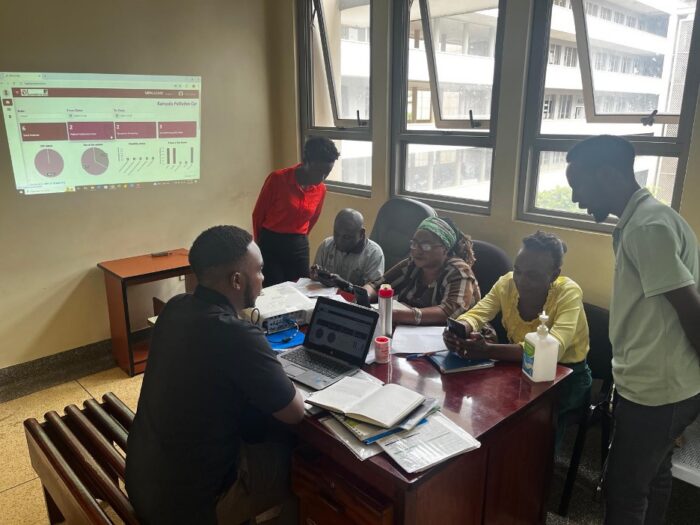
The problem mPallCare set out to solve isn’t just a shortage of specialists; it’s that suffering goes undocumented, and what isn’t counted isn’t planned for. Community health workers use a simple app to record the symptoms and concerns of people with advanced illness during home visits.
Those reports appear on a dashboard that health workers and staff at the local clinics, hospice, and referral hospital can see, so a patient in pain is identified and acted on rather than waiting until the next visit.
The platform’s design wasn’t guesswork. Research led by Allsop under the MRC Global Challenges Research Fund had already established, across Nigeria, Uganda and Zimbabwe, what patients, families, clinicians and policymakers actually need from digital palliative care tools.
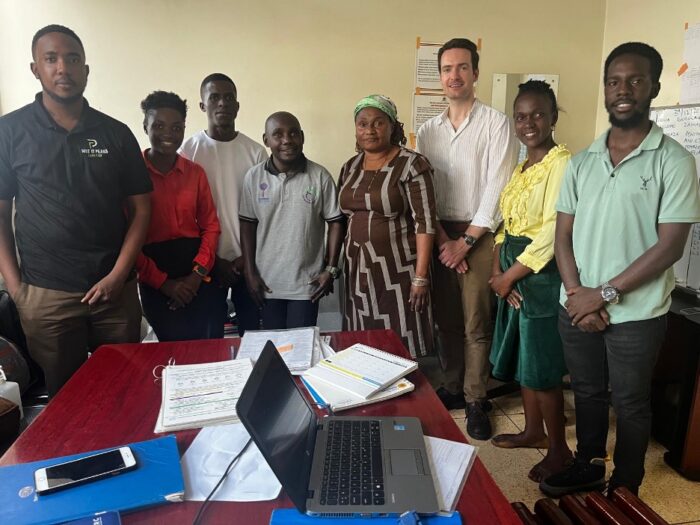
Co-design workshops with clinicians, village health teams and district stakeholders turned those findings into a working platform, built and maintained by MRT IT Peaks. University of Leeds IAA Pathfinder & Feasibility funding in 2024 then supported an open-source version and its rollout across 20 refugee and community health sites in Uganda.
From proven pilot to national policy
A formal feasibility and acceptability study in Bidi Bidi Refugee Settlement, involving 20 trained village health teams supporting 32 people with advanced cancer, showed the platform holding up under real pressure: participants completed 67% of all scheduled reports and 84.9% of symptom reports, both above the feasibility thresholds the team had set. Patients and clinicians described better communication, improved symptom management and greater continuity of care.
The study also surfaced what needs attention before scale-up — language and translation accuracy, initial navigation difficulty, connectivity and data synchronisation, and a tendency for engagement to decline over time. Clinical leaders identified integration with Uganda’s national health information system, DHIS2, as the key to making palliative care visible in national health reporting.
Alongside this, in-depth interviews with 44 refugees living with advanced illness across three settlements captured why this matters in human terms: the compounding legacy of pre-displacement trauma, the loss of the ability to care for family, and unmet psychosocial and spiritual needs that no purely clinical response can address on its own.
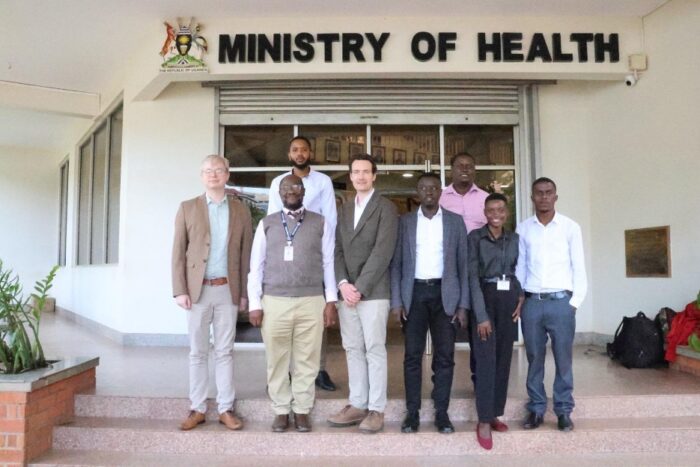
Together, this evidence shifted the central question from “does this work?” to “how does a government adopt it?” - with Uganda’s Ministry of Health now a direct partner in answering that.
The current IAA award is funding a joint implementation steering group with the Ministry, further interoperability testing against DHIS2, usability testing with health workers, and a Ministry-endorsed roadmap for phased national rollout.
A locally owned platform
None of this could have happened through any one partner alone. APCA’s standing with Ugandan and regional policymakers opened the door to the Ministry of Health; MRT IT Peaks, based in Kampala, built and continues to sustain the technology in-country rather than exporting a solution; and Leeds brought the research evidence and evaluation rigour.
There’s no spin-out or licensing deal here – MRT IT Peaks owns the core software, and the University retains rights to the research-derived content and evaluation data, an arrangement designed to keep the platform genuinely locally owned.
The findings have already reached beyond Uganda: a Perspectives piece in the Bulletin of the World Health Organization sets out an operational framework for embedding palliative care in humanitarian health responses, with a further piece forthcoming in The Lancet on palliative care in responses to conflict and forced displacement.
As Matthew Allsop puts it, relieving suffering isn’t a luxury to be added once a humanitarian emergency is over — and a simple digital tool, built in Uganda with the people who use it, can make the needs of people with advanced illness in a refugee settlement visible and inform the response the health system could provide.
This project was sponsored by the UKRI Impact Acceleration Account.