
How the arts can help communities process trauma
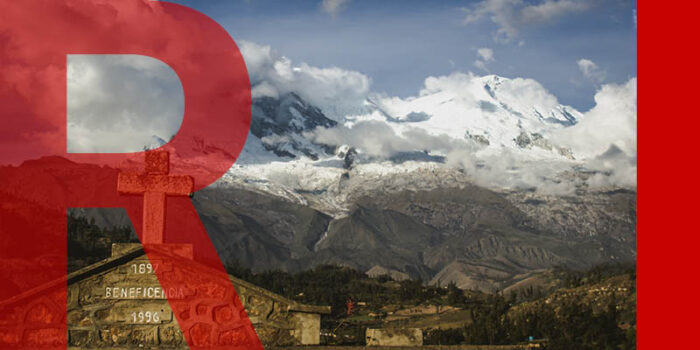
In Aberfan, a village in South Wales, a landslide in 1966 engulfed a primary school, killing 144 people, including 116 children. Yungay, a town in the Peruvian Andes, was almost completely buried by a landslide in 1970, where only 400 of the town's 8,000 inhabitants survived. In Armero, Colombia, more than 20,000 people died in 1985 when the town was inundated by debris flows, triggered by a volcanic eruption. And the coastal state of Vargas, in Venezuela, saw 50 separate landslides during a devastating week of heavy rain in December 1999, which destroyed thousands of homes and claimed over 2,000 lives.
During the decades that followed these catastrophes, the communities affected have rebuilt themselves, physically and emotionally. The long-term legacy and impact of such events is what interests Rebecca Jarman, Professor of Latin American Studies.
I want to understand how a disaster is memorialised, the recovery strategies that communities put in place, how the disaster is reflected in the arts, such as film and literature, and how the event is seen by the younger generation today.
— Professor Rebecca Jarman
Read the research storyImpact
- Knowledge discovery: investigated the intergenerational effects 10, 20, 50 or 60 years after disasters—including how the events and victims were memorialised through art, literature and film
- Community collaboration: worked with community members, including survivors, to understand lasting perspectives and effects of disasters.
Key information
- Major funders: Arts and Humanities Research Council (AHRC), British Council, Newton Fund
- Partners and collaborators: Peruvian University of Applied Sciences (UPC), The Colegio Santo Domingo de Guzmán
- Disciplines: Latin American studies, arts and humanities, global politics, disaster recovery, health and wellbeing
- Investigators: Professor Rebecca Jarman.
Keywords: disaster recovery, landslides, culture, community, legacy, South America, volcanoes