
Creative approaches to building inclusive, climate-resilient cities
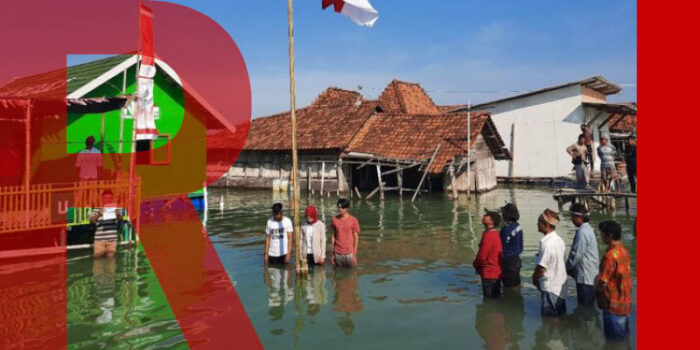 Researchers partner with communities, third-sector organisations, and government members to support person-centred climate resilience in Indonesia and Uganda.
From fisherwomen facing extreme flooding, to people with diffabilities calling for better emergency procedures – the Gender, Generation and Climate Change (GENERATE) project centres marginalised communities as they adapt to disasters and climate change challenges.
Impact
- Interdisciplinary, person-centred collaboration: researchers co-create creative, diverse outputs that centre the lived experiences and leadership of marginalised people in Indonesia and Uganda
- Policy impact: hosting events with policymakers, government officials, and local authorities supports policies that include the experiences of people with disabilities, women and older people.
Key information
- Major funders: UK Research and Innovation (UKRI), Economic and Social Research Council (ESRC)
- Partners and collaborators: Puspita Bahari, Banjarmasin City Government, Antasari Islamic State University, Indonesia Disabled People's Association (PPDI), Indonesia Disabled Women’s Association (HWDI), Sanggar Seroja, Crisis Response Management Consortium, Arus Pelangi, BPBD (National Disaster Management Agency), University of Mataram, Sebelas Maret University, InSpirasi, Indonesian Red Cross, West Nusa Tenggara Government, creatives and artists.
- Disciplines: geography, climate change, sustainability
- Investigators: Dr Katie McQuaid, Dr Desy Ayu Pirmasari, Andi Misbahul Pratiwi.
Intensified impacts of climate change
The impacts of climate change, such as disasters, flooding, and rising costs of living, can be fatal. They disproportionately affect already marginalised communities, including women, people in poverty, with insecure work, and who are diffabled.
Bringing together interdisciplinary teams of researchers, artists, urban communities and key stakeholders, GENERATE builds understanding of and challenges the intersecting injustices that worsen the impacts of climate change and disasters across Uganda and Indonesia.
This includes women, older people, people with diffabilities, informal workers, sexual and gender diverse people, refugees and asylum-seekers, and youth.
Local arts and games explore lived experiences
Their community collaborations draw on local arts and knowledges to foreground the perspectives, needs and responses of communities to climate change.
For example, researchers collaborated with Sanggar Seroja, a collective of transgender women in Jakarta; Mahawira Dillon, a leading Indonesian boardgame designer; and illustrators Kartika Luthfiyah and Leka Putra, to co-create ‘Gender Jeopardy’, a board game that explored transgender women's experiences of and responses to climate crises in Indonesia.
The game conveyed the challenges they face and how they intersect with poverty and environmental injustice.
Katie McQuaid said: “The game highlights how experiences of not just climate change, but everyday life, are shaped by our gender and how gender inequalities and discrimination exacerbate the vulnerability of sexual and gender diverse communities to issues like poverty, pandemics, environmental injustice and climate change.”
Alongside the game, Sanggar Seroja created four trans superheroes who represent interventions for climate justice. In a comic illustrated by Leka Putra, the heroes advocate for sustainable fashion, socio-economic empowerment, social justice and gender and climate equality.
Having been shared with local partners and policymakers, the experiences shared in the creative outputs formed the basis for a new crisis management guide published in partnership with the Crisis Response Management Consortium and Arus Pelangi.
The guide provides practical pathways to strengthen the resilience of trans women to different crises.

Diffability-inclusive disaster preparedness
In partnership with stakeholders from governments and the third sector, GENERATE co-creates evidence-led strategies to improve equity in urban areas.
Desy and Katie’s research 'Intersectional Experiences of Disability, Climate Change, and Disasters in Indonesia,’ found that due to systemic inequalities, people with diffability (PWD) are among the most vulnerable to disasters as they suffer higher rates of mortality.
'Diffability' describes ‘different ability’. It originates from the Bahasa Indonesia term ‘difabilitas’ meaning different abilities, coined by two Indonesian diffability activists. The researchers use it to highlight people’s diverse capacities and ways of doing things, as opposed to focusing on their dis-abilities.
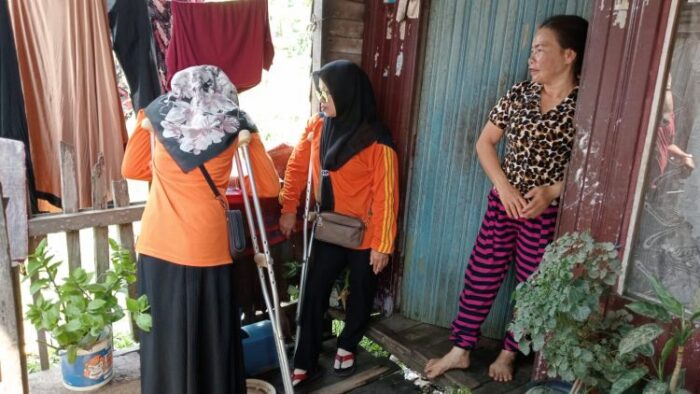
In Banjarmasin, which faces frequent threats of floods and fires, researchers collaborated with people with diffability, practitioners and policymakers to create a toolkit for inclusive disaster preparedness.
The Kayuh Baimbai toolkit raises awareness about the needs of PWD and supports them to lead interventions, be heard and involved in decision-making about their needs.
It was launched at a local event with key stakeholders and had positive responses from government, private and state enterprises.
Since then it has been used to train state and citizen firefighters and inform government inclusivity policies.
Fisherwomen strengthen safety and food security
Amid mounting climate pressures such as daily tidal flooding, fisherwomen in Demak demonstrate how collective action and local leadership can advance gender and climate justice.
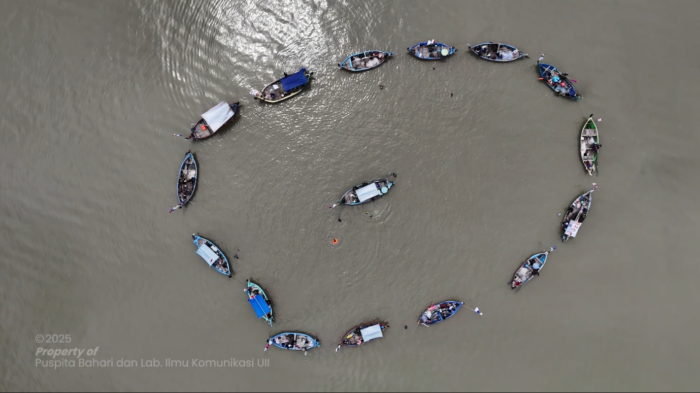
The Puspita Bahari Fisherwomen’s Community, in collaboration with the GENERATE project, mapped gender-based violence (GBV) cases in relation to climate change. They led a parade of 16 fisherwomen’s boats to highlight international action against GBV.
Fisherwomen established community waste banks and developed community-led, climate-resilient food cultivation practices in villages experiencing severe tidal flooding.
The initiative is designed to strengthen grassroots resilience and leadership among fisherwomen and coastal communities who experience intersectional and gendered impacts of the climate crisis.
As part of these interventions, researcher Andi Misbahul Pratiwi, Puspita Bahari (fisherwomen community) and Dr Katie McQuaid hosted the festival “Women Weaving Movements to Respond to the Climate Crisis.”
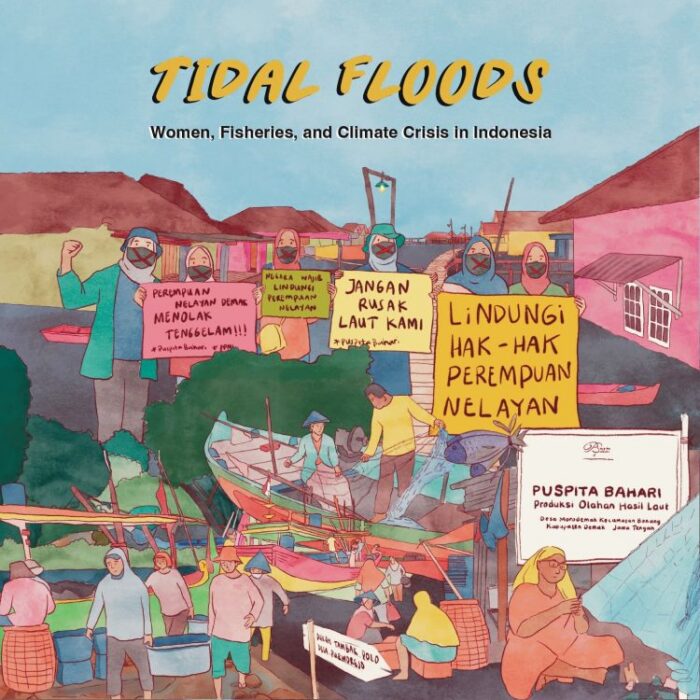
The event, held in Demak Regency, raised awareness of the urgent issue of tidal flooding with the Indonesian government. It also included the launch of an illustrated book – Tidal Floods: Women, Fisheries, and Climate Crisis in Indonesia – a collection of stories exploring the diverse experiences of women facing tidal flooding.
Recipes for disaster justice
GENERATE’s latest project was Resep Keadilan Bencana (Recipes for Disaster Justice), in collaboration with over 18 civil society organisations and 158 participants in Lombok.
The six-month community initiative, locally led by Lalu Faris Naufal Makhroja and Maulani Furi Fajarini, involved creative workshops on the theme of disaster justice across the island.
At the workshops, community members and artists creatively explored and reflected on their experiences of injustice and disasters in their regions.
The participants, including women, people with diffabilities, farmers, fishers, former migrant workers, teachers, child marriage and gender-based violence survivors, sexual and gender diverse people, older people, and informal workers, co-created local artworks to express their experiences, build solidarity, and advocate for equity in disaster management.
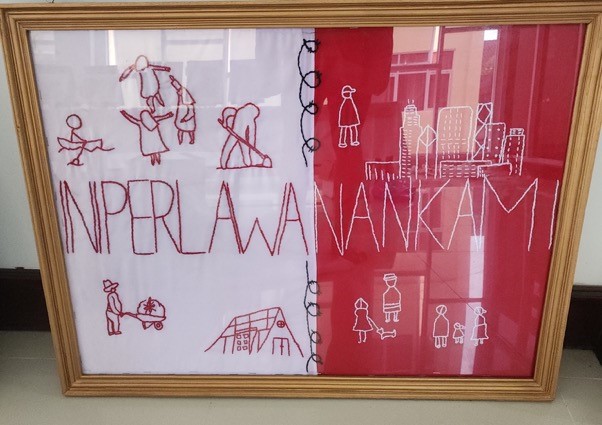
Dwi Andirani, Hadiatun Sulastri, dan Sopiatul Azizah Our Mobility, Our Resistance, 2025 Hand embroidered on fabric Inspired by participants’ experiences of moving to urban areas for better livelihoods during climate crises, oftentimes people’s social class becomes a major barrier during their mobility, even when they have relocated to urban areas. Economic injustices feel like barbed wires that separate each class. They, however, believe that to live is a form of resistance.
Their artworks were exhibited at a series of Resep Keadilan Bencana Festivals and public exhibitions.
At the centre of the exhibitions are a series of four counter-maps, co-created by all research collaborators across East, Central, West and North Lombok. These document multiple forms of environmental, social, health and economic hazards and disasters, demonstrating there is no such thing as a ‘natural’ disaster.

Tabrani Ali
We Refuse to Sink, 2025
Mixed media
This work draws inspiration from our conversations with the people of Ampenan, Telindung—whose village was submerged in 2003—and Jambi Anom in North Lombok. Their resilience in recounting their histories and survival, alongside how their social movements and initiatives thrive, continues to shine despite the persistent threats of tidal flooding and rising seas.
Local artworks included wayang puppets, recycled paper masks, batik, hand embroidery, collage, paintings, sculptures, pottery and lelakaq (creative writing).
The works explore the lived experiences, innovations, and injustices shared by diverse communities across the island, while celebrating community leadership, creativity and innovations.
The latest festival in April 2026 brought together over 135 participants, including government representatives, civil society organisations, disability advocacy groups, academics, and community members.
The event created a space for dialogue and collaboration on pathways toward meaningful and inclusive disaster risk reduction in Lombok.

Mashur Hadi
Various Struggles, One Solidarity, 2026
Mixed Media
In every Resep Keadilan Bencana workshop, there is always one word that emerges as both the solution and the vision for disaster justice shared by all communities: solidarity. Solidarity – even when the struggles and initiatives being carried out are different and highly diverse. Many, if not all of which, we heard were pioneered by women.
The varied collaborations supported by the GENERATE project show the impact that community organising, creative expression, and advocacy can have – building awareness and improving local policy to create more equitable and climate-resilient cities.
Keywords: climate change mitigation and adaptation