
Creating an army of citizen scientists
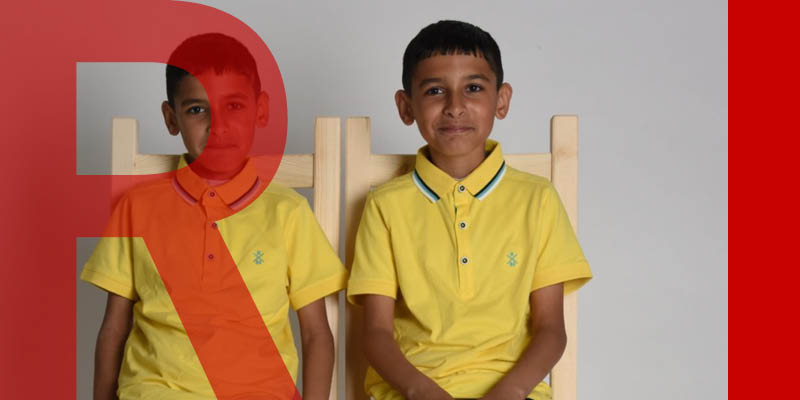
In 2023, Professor Mark Mon-Williams shared insights from the Born in Bradford project as part of our Further Together series.
In this latest update, Mark reflects on how the Born in Bradford project has progressed and how it continues to transform our understanding of childhood, health and opportunity.
“Through Born in Bradford, we’ve been tracking the lives of over 20,000 children to understand how their environment, genetics, and lifestyle shape their health and wellbeing.”
— Professor Mark Mon-Williams
Read the original research storyImpact
- Community collaboration: empowered schoolchildren to become citizen scientists
Key information
- Major funders: Wellcome Trust
- Partners and collaborators: University of Bradford, Bradford Teaching Hospitals NHS Trust, University of York, University of California, Berkeley
- Disciplines: social sciences, health, neuroscience
- Investigators: Professor Mark Mon-Williams
This huge study, involving a collaborative team spanning the Universities of Leeds, Bradford, and York, and the Bradford Teaching Hospital, has worked tirelessly to generate insights that can shape better futures.
With support from the Wellcome Trust, the project expanded to follow 30,000 young people into adulthood. That phase was called ‘Age of Wonder’ and brought both exciting opportunities and logistical challenges.
“To meet these challenges”, Mark explains, “we did something new. We turned schoolchildren into citizen scientists.”
Working directly with schools, we created a model where students helped collect data and shape research.
“This was not just about scale,” he says. “It was about giving young people a sense of ownership and curiosity. Teachers and pupils became integral partners in our mission.
The result? A growing movement- an “army” of citizen scientists – helping researchers gain a deeper understanding of what helps children and young people thrive.
“It’s a testament to the power of collaboration and the potential of research to inspire and empower communities,” Mark says.
Our work has been building a movement - an “army” of citizen scientists - who contribute to a deeper understanding of what helps children and young people thrive.
The UK government is now using the data to shape policy
Much of the evidence behind the Child of the North reports produced over 2024 and 2025 comes from Age of Wonder. The UK government is now using the data and evidence to shape policy.
Born in Bradford (BiB) began in 2007, following children through early childhood and the primary school. “We have gained unique insights into health inequalities, education, and the impact of environmental exposures such as air quality.”
The project has had major phases as the children reached different stages in their lives. In 2022, the programme entered its ‘adolescent’ phase with Age of Wonder.
This is the UK’s largest study of teenagers and tracks 30,000 young people aged 12–19 years, exploring identity, aspirations, digital lives, and transitions into adulthood with a focus on mental health.
This long-term research goes beyond static snapshots to reveal how inequalities emerge, persist, and can be disrupted, offering rare opportunities to test the long-term impact of policies and interventions.
It enables researchers to study generational change and intergenerational cycles of disadvantage and resilience, producing insights that are highly relevant for diverse urban populations across the UK and beyond.
BiB has built trust with families, schools, and services by embedding research within the community. This has created a platform that not only advances science but also delivers practical solutions for improving children’s lives.
The power of following a group for over 20 years, is that you capture the whole journey, linking early life experiences to later outcomes in education, health, employment, and wellbeing.
We are focused on solutions – not just identifying problems
What started as a bold idea (tracking a group of children in Bradford over 20 years) has grown into a powerful evidence base that is changing how we think about early intervention and partnership working.
Initially, the study began by identifying challenges, yet we have now reached a point where the research is solutions-focused, and we are finding how we can implement change that will improve outcomes for all children and young people. The evidence shows where children end up and how earlier intervention can avoid adverse outcomes.
The next phase is called Age of Opportunity. Building on the success of Born in Bradford, it will follow over 20,000 BiB children into early adulthood, focusing on how to help them succeed in work and life.
This will provide unprecedented insight into the early life factors that shape employment, training, and life chances, along with the barriers and opportunities for young people entering the workplace
Young people who are not in education, employment, or training (NEET) face some of the most entrenched inequalities in society. Too many young people in the North of England are entering adulthood without the qualifications, health, or confidence they need to succeed.
The consequences of being NEET are stark. Long-term NEET status is associated with poor health, higher levels of criminal justice involvement, and lower earnings
Those who were NEET can expect to earn around 17% less than their peers when they reach 30 years of age; young men who are NEET are five times more likely to have a criminal record; and one in ten report turning to drugs or alcohol as a result of unemployment.
The effects are long-lasting: research shows higher hospitalisation rates and even premature mortality decades later.
In Bradford, where NEET rates are among the highest in the country, the challenge is urgent.
Born in Bradford data highlight how disadvantage accumulates early: NEET rates were 4.5% among those with Special Educational Needs and 8.2% among those with health problems affecting education, compared to just 1.5% among their peers without these challenges.
“NEET is not a ‘sudden’ outcome when children leave education but the culmination of inequalities stretching back to the earliest years of life. Reducing the number of young people who are NEET must therefore be a national priority,” Mark explains.
If we can remove children from a trajectory towards NEET then we will create a more skilled and productive workforce, reduce long-term demand on health and social services, and foster more inclusive communities.
Early action can change outcomes
Thanks to years of longitudinal research, the team can now see how early action can change outcomes. The data don’t just highlight problems; they demonstrate what works. It proves the value of collaboration and how joined-up approaches can improve the lives of children and young people.
Age of Opportunity will recruit young people as citizen scientists again to ensure the research is rooted in lived experience. We will build both evidence and capacity by equipping participants with skills in data literacy, problem-solving, and analysis.
Citizen scientists will investigate questions such as:
- What skills and attributes do employers most value?
- What barriers do young people face in the transition from school to work?
- How do health, education, and community factors intersect to shape career trajectories?
This participatory approach will give us authentic insights that can inform local and national decision-making, while also empowering young people to shape the policies that affect their futures.
The transition from adolescence into adulthood is a turning point. It is the moment when the inequalities that begin in childhood can either be overcome or become entrenched. Age of Opportunity combines world-leading data with the voices of young people.
It will not only improve individual outcomes but also strengthen communities and economies. We can build a healthier, more skilled, and more inclusive workforce by helping young people to thrive – and this will create a more prosperous society.
Part of the Further Together updates series.