
A leading partner in the move to ageing healthily

How a research-supported dance project is changing lives and shaping future policy.
Physical inactivity in older populations is a health problem that often goes unseen in wider society. But with the UK growing older and more sedentary, how can we get those at greatest risk of falls, dementia and other illnesses to move more? Research led by experts at the University of Leeds is setting the tempo…
Impact
- Long-term engagement and sustainability: participants in the Dance On program showed high attendance rates (72% on average), and their increased physical activity levels remained stable over time, highlighting the sustainability of well-designed dance interventions
- Influence on public health strategy: the research provided evidence that dance programs can effectively combat inactivity-related health issues, supporting arguments for long-term investment in such interventions by public health policymakers.
Key information
- Major funders: Sport England
- Partners and collaborators: Leeds City Council, City of Bradford Metropolitan District Council, City of Doncaster Council, Yorkshire Dance, One Dance UK, darts
- Disciplines: biology, healthcare, exercise sciences
- Investigators: Professor Sarah Astill.
Dance and its life-changing impact
In 2015, Sarah Astill was a Lecturer in Motor Control at the University of Leeds. And by her own admission, she definitely wasn’t a dancer.
So when she was asked by Sue Hayton, a colleague in the Cultural Institute who was investigating movement among older people, Sarah never expected to stumble upon a research area that would capture her interest for years to come.
“I was a lab scientist,” Sarah, now a Professor in the School of Biomedical Sciences, recalled. “I tracked movements, I looked at muscles, I studied brain activity.
But I went along for a day and they introduced us all to contemporary dance.”
Together with gerontologists, GPs and other researchers, Sarah found herself being put through her paces at a Yorkshire Dance, all in the name of exploring the medium as a potential way to encourage older people to move more.
“Now, I can’t do the waltz, the samba or Latin dance,” Sarah said, “but the minute I did this, I thought ‘I can do this’ – and surely it’s got to be helping with getting people active and supporting balance and mobility.”
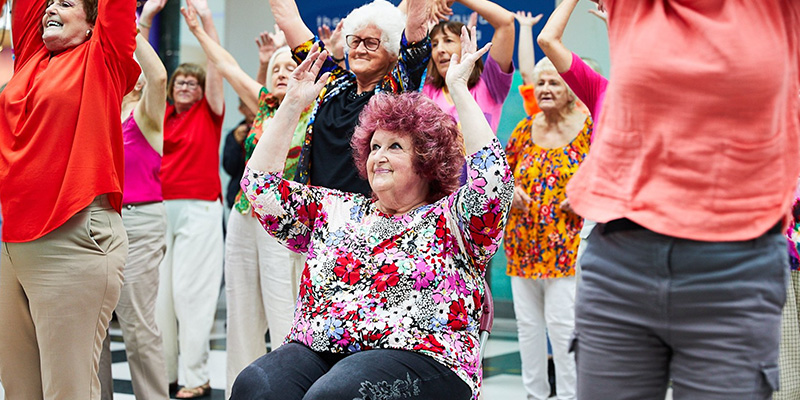
The stationary nation?
As a country, we need to think about movement more. Physical inactivity is responsible for one in six deaths in the UK, making it as dangerous as smoking and costing the country approximately £7.4bn every year.
And the problem only gets worse as we get older. According to research by Sport England, 44 per cent of people aged 55 or over are inactive, compared to just 29 per cent of adults as a whole.
Add to the picture an ageing population, with the number of people 60 or older predicted to pass the 20 million mark by 2030, and it’s clear that physical inactivity is something of a ticking timebomb.
But why exactly are older people less likely to meet the recommended weekly target of at least 150 minutes of moderately intense activity or 75 minutes of vigorous activity?
As Sarah is keen to point out, much of it comes down to accessibility.
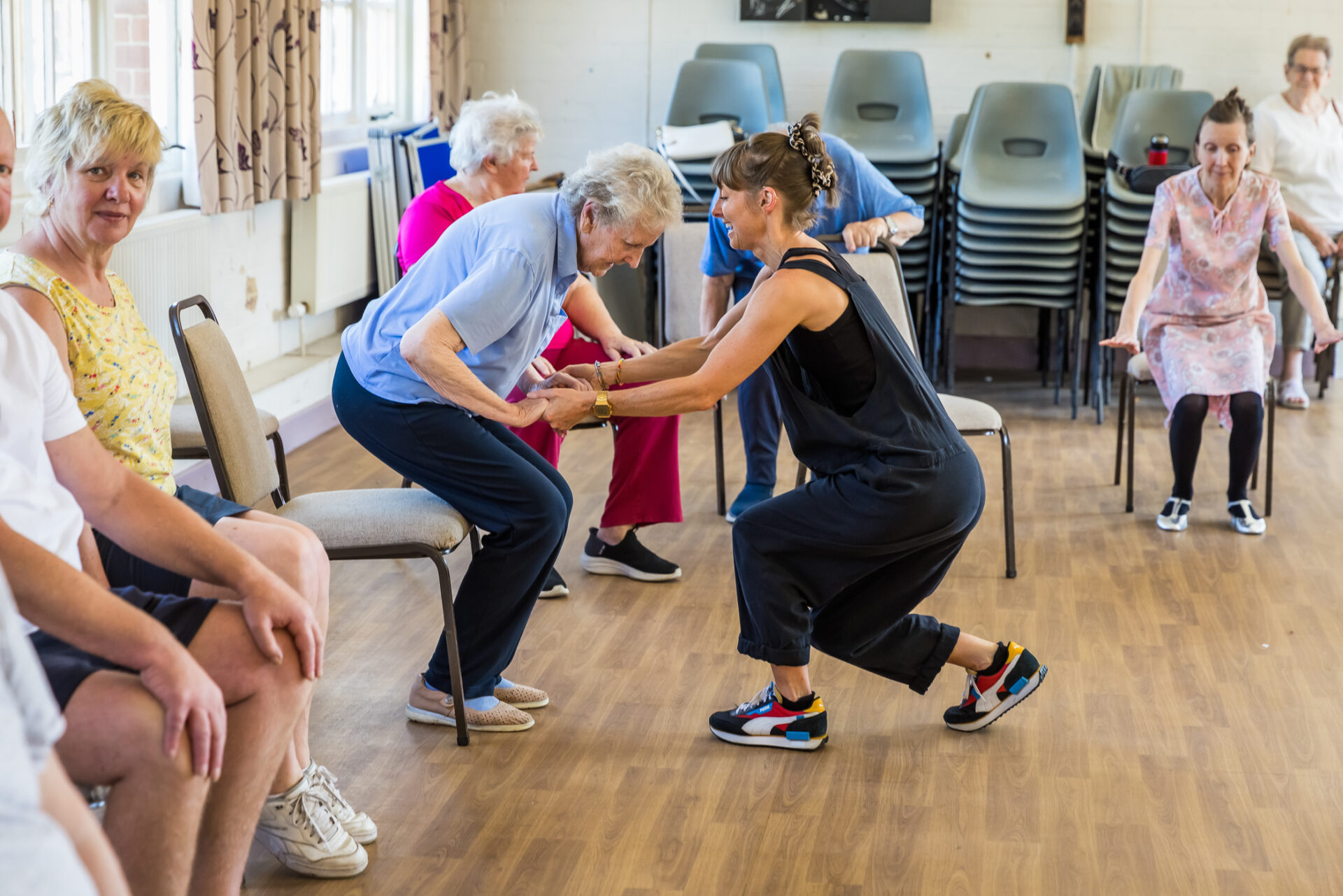
“Being active can be expensive in some respects – It might be that the transport links are expensive, or even non-existent, meaning costly private taxis might be the only way to attend a suitable class.
“We also know that the gap between the richest and the poorest is getting wider and wider, so these health inequalities – which are steeped in geography, socioeconomic background, gender and ethnicity – are also getting bigger and bigger.”
Huge potential for dance to change lives
Tackling these challenges by empowering older people to move more could deliver huge health and social benefits, both on a personal and global level.
Figures shared by the NHS suggest that regular physical activity can reduce the risk of type 2 diabetes and colon cancer by as much as 50 per cent, with an up to 30 per cent lower risk of depression, dementia and falls among older adults.
Sport England, meanwhile, claims that leading an active lifestyle prevents 900,000 cases of diabetes and 93,000 cases of dementia a year, saving the UK economy £7.1bn.
Overcoming barriers
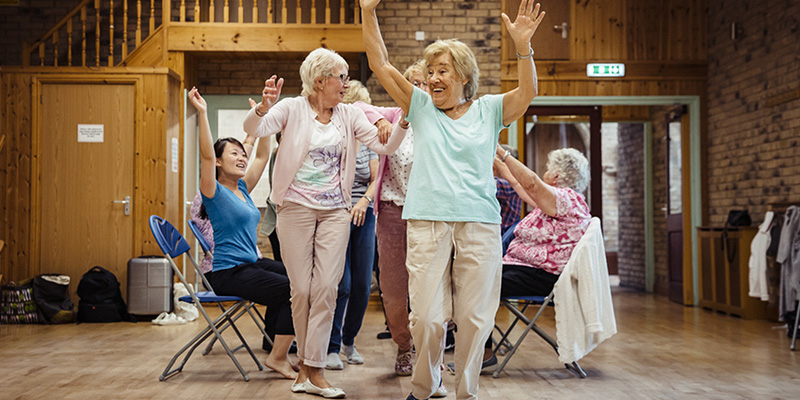
For Dancing in Time, Sarah collaborated with Yorkshire Dance, with support from Dr Laura Britten, to design a programme for older adults from areas of Leeds where health inequalities are the largest, exploring whether contemporary dance would be a feasible and appealing activity for them.
Specially trained choreographers from Yorkshire Dance delivered two 90-minute sessions twice a week for eight weeks, encouraging low-impact, person-centred movement. But this first piece of research focused only on modifying the risk factors for falls, a common cause of injury among older adults.
“What we set out to do was establish whether people would come, and then keep coming back,” Professor Astill said. “Once they did, we wanted to measure the things that we know make people more likely to suffer a fall: their mobility, how sedentary they are, any depression and fear of falling.”
The results were revelatory.
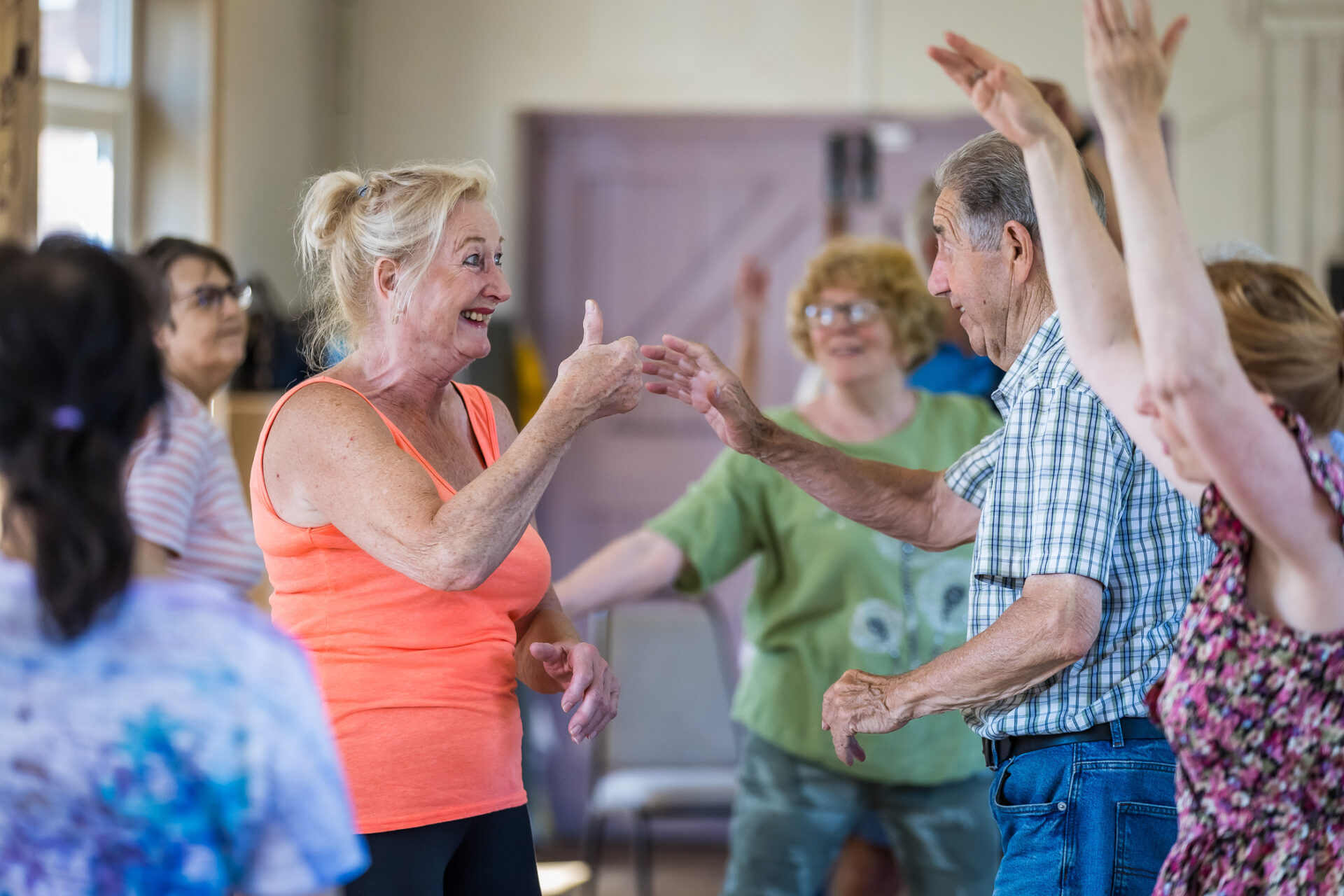
“Quantitatively, we found significant increases in moderate and vigorous physical activity, a significant decrease in the amount of time people were sitting for during weekdays, and reductions in depression and fear of falling,” Sarah said.
“Then when we ran focus groups, they were talking about how they became more confident or had started walking more as a result; all those knock-on effects.”
Building on the pilot's success
Sarah’s team began working with One Dance UK, Yorkshire Dance and the charity darts to develop Dance On, a follow-on project that extends beyond Leeds into Bradford and Doncaster.
Initial funding came from Sport England’s Active Ageing Fund and investment from city councils in Leeds, Bradford and Doncaster. From 2023-2025 Get Doncaster Moving funded darts through their Sport England Local Delivery Pilot programmes to build on the work that had been done so far, whilst Yorkshire Dance secured investment from National Lottery, Reaching Communities and Leeds and Bradford Councils to extend the Dance On programmes in Leeds and Bradford
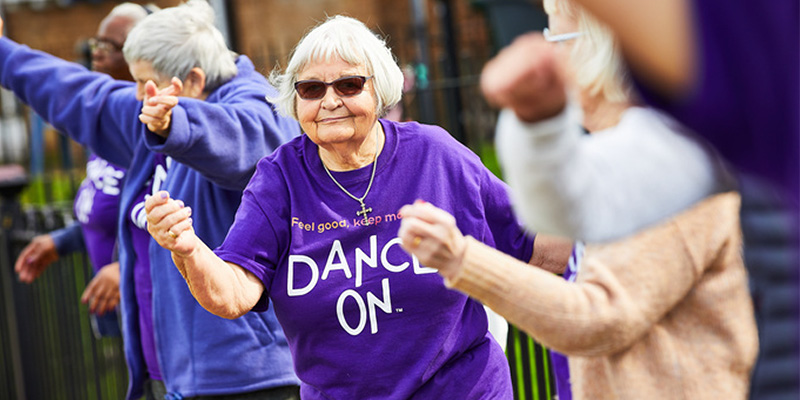
Dance On applied the tested model of contemporary dance to deliver weekly classes over a one-year period to 685 people with an average age of 75, more than a third of whom were from highly deprived communities.
But the efforts were not without their challenges. Halfway through the project, the COVID pandemic forced everyone involved in Dance On to make drastic changes.
Improvising at double speed
“We were working with some of the most vulnerable people in society at that point and suddenly we had to take something away from them,” Sarah said, “everything quickly moved online. Yorkshire Dance partnered with another arts company to do a postcard project; and in Doncaster darts' dancer, Charlotte Armitage, recorded weekly 'Dance On the Airwaves' on Sine FM with accessible, easy to follow audio instructions to get dancing in their own homes. Our group members were even dancing the Dance On moves in their doorways.”
The wider scope of Dance On also required a different approach to the research.
“With the different demographics in the three cities, we had to think about how we could market the contemporary dance classes to, say, Caribbean populations in one place, Polish people in another, Sikh people, rural areas, and so on,” Sarah explained.
“But above all, we just focused on putting older people first”.
“In fact, in the pilot we used the ‘Geriatric Depression Scale’ – a well-established medical questionnaire – to assess mood, but with Dance On, we listened to the views of our dancers who hated that wording and changed how we measured their mood entirely.”

A healthy impact
Despite the longer timespan involved and the challenges of recruiting older people from broader demographics, people attended an average of 72 per cent of all Dance On sessions offered over the 12 months.
Crucially, there was a statistically significant increase in self-reported physical activity levels, which remained stable and showed no signs of dropping off over time.
Participants told researchers that their health had improved since attending the classes, reflecting the intricate link between being active and feeling well.
Even the disruption of lockdown could not stop Dance On from having a big impact; classes delivered over Zoom were scored at 4.8 out of five by those surveyed, with significant increases in activity, happiness and life satisfaction also reported.
The dance goes on...
Between 2021–2023, darts established strong links with the health and care sector, with NHS and public sector partners showing interest in the Dance On model in the face of rising demand and widening health inequalities, with continuing funding from Sport England.
The momentum behind Dance On has only grown. In Leeds and Bradford, continued backing from both local authorities – alongside significant investment from National Lottery Reaching Communities – has ensured the programme’s future until December 2026.
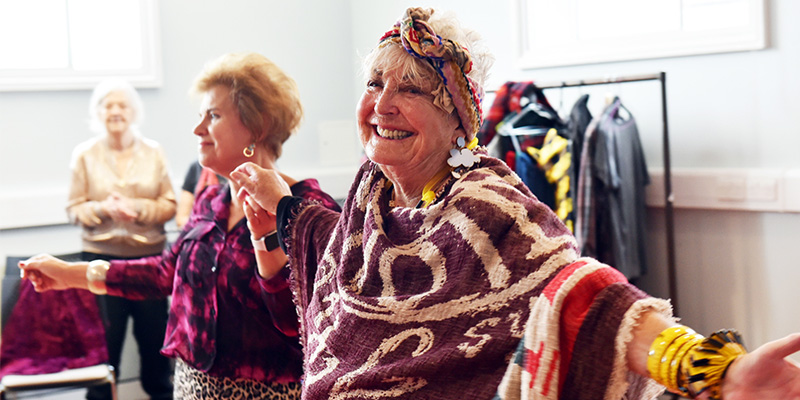
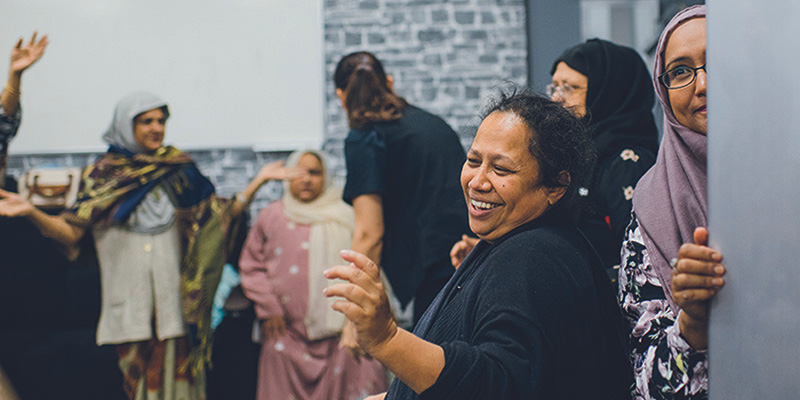
Yorkshire Dance now delivers twenty-four weekly sessions, reaching more than 250 people every week. As the programme has expanded, so too have the journeys of its participants. In Bradford, women involved in Dance On were invited to join So Far, So Good – a commissioned, site-specific performance for the UK City of Culture 2025 – opening the door to new confidence, creativity and connection beyond the studio.
And that momentum is spreading. 'Get Doncaster Moving have now confirmed further funding for Dance On from 2025 through Sport England LDP for a further two years. Over this next phase, the focus will be to:
- Strengthen delivery in residential care settings across Doncaster.
- Transition community sessions to our freelance dance team.
- Build dedicated capacity to work with health and social care partners and support workforce development.
- Extend the Dance On approach into related health areas such as frailty, falls prevention, pulmonary rehabilitation, mental health, fibromyalgia and long covid.
A total of £190,000 has been confirmed by Get Doncaster Moving and Doncaster Public Health to support this work. A fuller explanation of the relationship with Get Doncaster Moving can be found on page 44 of the Dance On Toolkit: Dance On Toolkit
Tailored to those in need
For Sarah, it’s proof that by understanding the needs of older people and designing exercise programmes that suit them, we can tackle the huge threat of physical inactivity on our public health and economy. The impact also adds weight to her argument that commissioners should think in a more long-term way about physical activity interventions for older audiences.
“Unfortunately, it’s very easy for exercise providers to make little mistakes without even realising it,” Dr Astill noted, “they might put on a class on a Tuesday afternoon but not know there’s already a popular music session in the area at the same time, or schedule something for before 9.30am, when free bus passes can be used from. Similarly, they might run a class for 12 weeks and then totally disappear.”
“Dance On shows that by developing physical activity classes that speak to older people in their language and make movement accessible and enjoyable, we can make a huge difference with activities they keep coming back to.”
As the programme has expanded, the wider community around it has strengthened too. New participants continue to join and retention remains high, helped by a growing sense of belonging in each group. A dedicated social committee led by Yorkshire Dance now supports regular events in Leeds and Bradford – from parties to informal sharings – giving people more chances to connect beyond the studio. To help others follow these footsteps, Sarah and the project partners have also created a free practical toolkit for carers, care-home staff, public health teams and community practitioners who want to set up their own dance programmes for older people.
“Dance On has been driven by a desire to co-create opportunities for health and wellbeing in local communities,” Sarah said. “It’s a great example of how collaboration between universities and partner organisations can deliver important research and make a positive difference.
“But despite its success and the strength of the evidence behind it, the model is still precarious. We haven’t yet found a commissioning pathway that properly supports or scales this kind of work, so it continues to rely on the commitment of trusts and foundations. That makes the impact we’ve achieved even more special – and shows what could be possible with long-term, secure investment.”
To learn more about Dance On, visit:
Professor Sarah Astill
Sarah is a Professor of Motor Control in the School of Biomedical Sciences at the University of Leeds.
An expert in the neural and behavioural control of movement across the life and healthspan, she uses motion analysis, surface electromyography and non-invasive stimulation techniques to study how movements are controlled and learnt/re-learnt, and how movement or physical activity affects this.
Professor Astill is the co-lead for the University’s Interdisciplinary Research Network, Reimagine Ageing, which brings together discipline-specific experts to create new solutions to the major societal challenge of ageing.
You can repost this article, following the terms listed under the Creative Commons Attribution-NonCommercial-NoDerivatives 4.0 International licence.
The views expressed in this article are those of the author and may not reflect the views of the University of Leeds.